







Sailing the High Seas with Chicken Pirate: My Crash Game Adventure
I wasn’t expecting much when I first loaded Chicken Pirate Crash Game. Honestly, the title sounded quirky enough to make me smile, and that was about it. But within minutes, I was drawn in by something I hadn’t felt in a long time with an online slot: pure, unpredictable adrenaline. Let me take you through my journey, what I learned, and how this little pirate chicken stole my attention—and, occasionally, my bets.
First Impressions: Quirky but Compelling
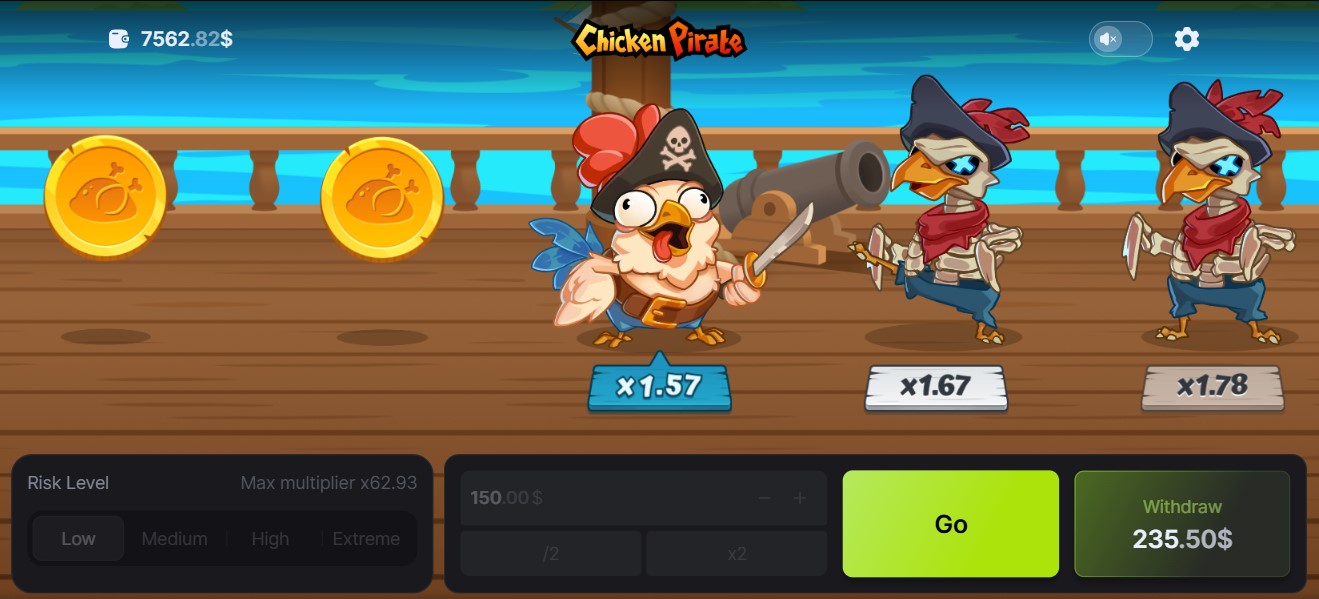
The moment I opened the game, the visuals grabbed me. Bright, playful animations, a tiny pirate chicken waddling across a deck, and a soundtrack that felt like a mix between a jaunty sea shanty and video game tension—there was something charmingly chaotic about it. I’ll admit, I laughed at the chicken trying to keep its balance as the multiplier ticked upward. It’s a little ridiculous, but in the best way possible.
Unlike traditional slot machines, there are no spinning reels, no scatter symbols, no free spins. The core of the game is simple: watch your chicken traverse the deck while the multiplier rises and cash out before it crashes. Easy to explain, hard to master—and that’s exactly why I got hooked.
The First Round: Learning the Mechanics
My first round was mostly trial and error. I placed a small bet—$0.50, just to test the waters—and hit start. The chicken started moving, each step increasing the multiplier, and my heart raced. Do I cash out at 1.5x? 2x? I froze, a mixture of excitement and dread, and before I knew it… crash! My bet was gone in seconds. I laughed at myself—what a rush.
The learning curve in Chicken Pirate is gentle but unforgiving. You quickly realize that timing is everything. You can’t just “let it ride” forever. The thrill comes from gauging the risk: when do you cut your losses, and when do you ride the wave for bigger multipliers?
Setting a Strategy: Observation and Experimentation
After a few rounds, I started noticing patterns—not that the game is predictable, but rather that human psychology plays a huge role. I tried different approaches:
- Small bets, frequent cash-outs – This helped me stay in the game longer, getting a feel for the multiplier fluctuations.
- Moderate bets with higher multiplier targets – Riskier, but when I hit it, the payout felt like hitting the jackpot.
- Random timing – Pure chaos, sometimes funny, sometimes catastrophic.
I realized that my favorite approach was a mix: a baseline multiplier target, with occasional spontaneous risks. It made the game feel alive, not formulaic.
Demo Mode: The Safe Playground
Before putting real money at stake, I highly recommend spending some time in demo mode. That’s exactly what I did, and it made a world of difference. Demo mode lets you practice without pressure, understand multiplier behavior, and experiment with cash-out timing.
One insight I gained: the multiplier doesn’t follow a predictable pattern, so overthinking can be just as dangerous as underestimating it. You need a balance between instinct and strategy.
Gameplay Experience: Tension, Rewards, and Losses
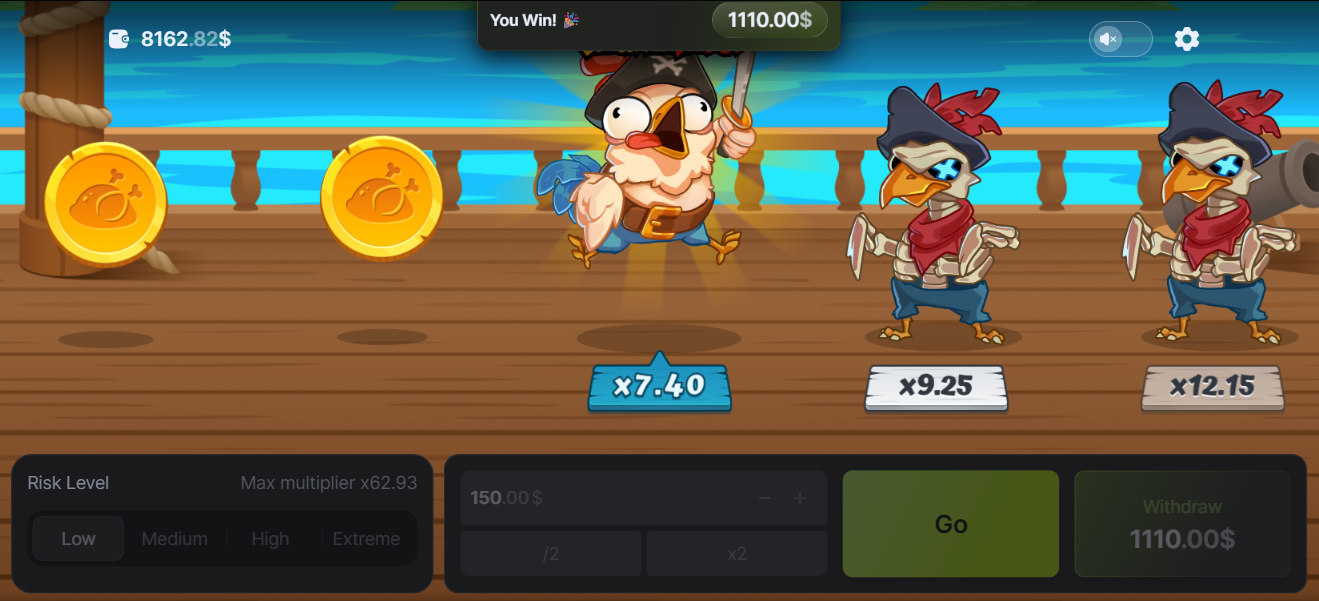
Let’s talk about the core experience. There are moments when your chicken is at 1.8x, and you’re thinking, “Maybe I should just take it.” Then suddenly, it jumps to 3x. Your palms sweat, your finger hovers over the cash-out button, and your mind screams: “Do it now!” That tension, that split-second decision, is addictive.
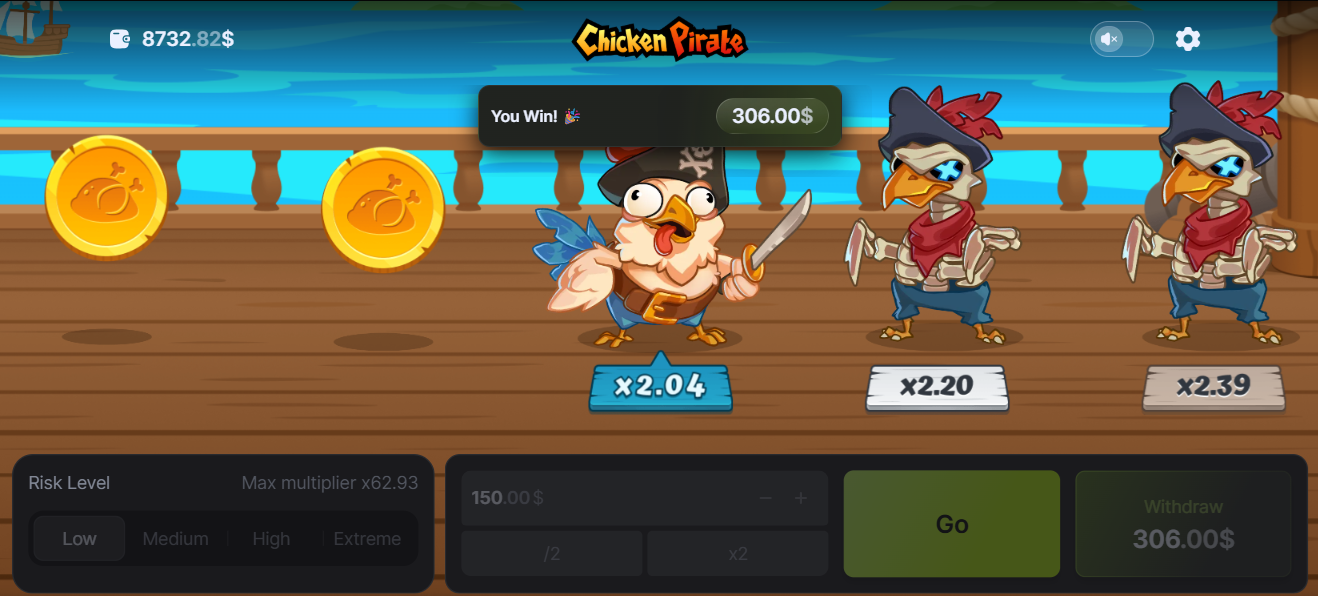
I’ve had rounds where I cashed out at 2x and felt smart. I’ve had rounds where I chased a 5x multiplier and watched my bet disappear in a blink. And honestly? Both experiences are thrilling in their own way. The unpredictability is what sets Chicken Pirate apart from standard slots.
Betting Range and Bankroll Management
I experimented across the betting spectrum, starting with $0.10 and pushing up to $50 per round. Here’s what I found:
- Low bets are perfect for learning, stretching your bankroll, and having fun without stress.
- Medium bets increase tension and potential rewards—this is where the game becomes exciting but requires focus.
- High bets feel like roller-coaster gambling. One wrong call, and your bet disappears. One right call, and the payoff is huge.
Bankroll management became crucial. I learned to divide my budget into segments, treat each segment as a mini-session, and stop chasing losses. If you treat it like a casual adrenaline game rather than a guaranteed win machine, you’ll enjoy it more.
Understanding Multipliers and Probabilities
One thing that impressed me was the game’s provably fair system. You can actually verify that each round is random and unbiased. That transparency made me trust the game more than many other online slots I’ve tried.
The multipliers rise steadily, but the crash can happen at any moment. Here’s the key: the higher the multiplier, the less likely you are to reach it consistently. That’s the essence of risk vs. reward. My best win so far was around 7x my bet, which felt epic for a few seconds before the next round reset the tension.
Mobile Experience: Playing on the Go
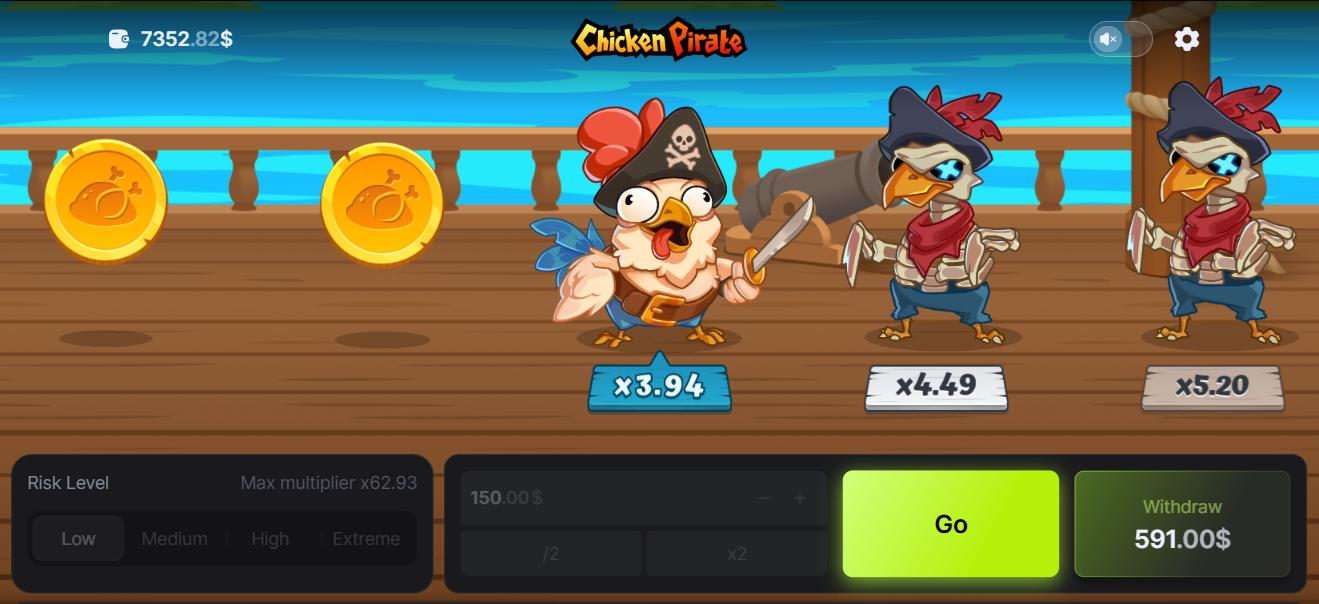
I mostly played Chicken Pirate on my phone, and I have to say—the experience is excellent. The touch controls are intuitive, animations remain smooth, and the screen layout is clear even in portrait mode. I found myself playing on short breaks, waiting for coffee, or commuting, and it never felt clunky.
The thrill is just as intense on mobile as on desktop. In fact, the tactile sensation of tapping “Cash Out” adds a personal connection to the game—I don’t get that with automated spins on other slots.
Lessons Learned: Timing, Patience, and Fun
After dozens of rounds, here’s what I’ve internalized about Chicken Pirate:
- Timing is everything – Cash out too early, and you miss potential; too late, and you crash.
- Patience pays off – Sometimes, waiting one extra second is the difference between a decent win and nothing.
- Losses are part of the experience – The game is designed to be unpredictable. Accepting losses makes the wins sweeter.
- Enjoy the theme – The pirate chicken isn’t just cute; it makes the game enjoyable even when things go wrong.
It’s rare that I get genuinely entertained by an online slot, but Chicken Pirate manages to mix humor, strategy, and tension seamlessly.
Personal Strategies That Work for Me
I developed a few approaches that keep my gameplay engaging without blowing my bankroll:
- Set a Multiplier Range – I usually target between 1.5x and 3x for low-to-medium bets. It’s conservative but keeps me in the game longer.
- Occasional High-Risk Round – Once or twice per session, I push for a 5x–10x multiplier with a slightly higher bet. Even if I lose, it’s thrilling.
- Split Session Bankrolls – I divide my money into mini-sessions ($20–$50) to avoid chasing losses.
- Trust Instincts – Sometimes, your gut tells you it’s time to cash out. I’ve learned to listen to it.
Pros and Cons From My Experience
Pros:
- Exciting, fast-paced gameplay
- Quirky and fun pirate theme
- Mobile-optimized with smooth controls
- Free demo mode to practice
- Provably fair system for trust
Cons:
- High-risk nature can lead to frustration
- Limited betting strategy compared to traditional slots
- No bonus rounds or progressive jackpots
Final Thoughts: Why I Keep Coming Back
Chicken Pirate isn’t just a slot; it’s a mini adventure every time you press start. There’s humor, unpredictability, and that small moment of triumph when you cash out at the perfect time. The game manages to keep me engaged without overstimulation. It’s casual enough to enjoy in short bursts but thrilling enough to pull me in for longer sessions.
If you like risk, timing, and a little chaos with your online slots, Chicken Pirate is worth a try. I can’t say you’ll win every time, but I can promise it’s a wild, funny, and unexpectedly strategic experience.